Amaranth
Lineage of Extraction

Spanish authorities outlawed cultivation due to ceremonial significance.

Traditional knowledge systems destabilized through religious conversion and land seizure.
PLANT
Amaranth
Ancestral grain. Colonial suppression. Living resurgence.
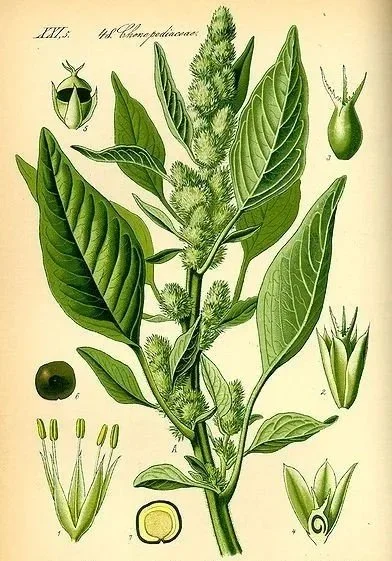
Amaranth is an 8,000-year-old pseudocereal native to Mesoamerica. Revered across Indigenous foodways and ceremonial life, it became a target of colonial suppression under Spanish rule. Though cultivation was stigmatized and interrupted, communities protected seed knowledge across generations. Today, amaranth returns as nourishment, memory, and sovereignty.
Lineage of Extraction
Spanish authorities restricted cultivation because amaranth was bound to ceremony, collective memory, and Indigenous spiritual life. Colonial land seizure and later industrial food systems displaced local grains and weakened community seed economies.
Lineage of Survival & Resistance
Despite centuries of suppression, amaranth seed keepers — particularly Indigenous women — maintained cultivation in home gardens, ceremonial spaces, and community networks. Today, seed saving organizations and agroecological movements are restoring amaranth across Mesoamerica and the U.S. Southwest.
Quick Profile
Why This Matters
Amaranth reveals that wealth is not only monetary. It is also stored in seed diversity, ceremonial relation, nourishment, and local governance. Reclaiming amaranth restores a living archive of autonomy.
Its reclamation restores more than a crop. It restores seed diversity, ancestral memory, ceremonial continuity, and the right of communities to define nourishment on their own terms.
Know a related effort?
Submit to the Repository- Ceremonial prohibition and crop suppression
- Religious conversion tied to agricultural control
- Industrial food regimes displacing local grain systems
- Seed saving networks and farmer-to-farmer exchange
- Cultural revitalization through food and ceremony
- Community-controlled growing, processing, and trade